Showing posts with label gig worker. Show all posts

Friday, December 26, 2025

Review of 35 BEST WORK FROM HOME JOBS: Best Remote Jobs, Earn Money Both Online and Offline, Passive Income, Financial Freedom and Finding the Right Home Jobs by Bharline Binny


35 BEST WORK FROM HOME JOBS is a concise and beginner-friendly guide designed for anyone interested in earning income from home. Written by Bharline Binny and published in May 2021, the book focuses on introducing readers to a wide range of remote, flexible, and home-based job opportunities. Its main goal is to help readers understand how working from home can provide financial stability, flexibility, and a pathway toward greater independence.

From the opening pages, the author emphasizes the growing appeal of work-from-home lifestyles. The book challenges the traditional office-based work model and encourages readers to consider alternatives that better suit modern living. The writing style is simple, supportive, and motivational, making it especially appealing to readers who are new to remote work or uncertain about where to begin. Rather than overwhelming the reader with technical details, the book presents ideas in an easy-to-digest manner.

One of the standout strengths of this book is its broad scope. It covers both online and offline work-from-home jobs, which sets it apart from many similar guides that focus only on internet-based opportunities. This makes the book accessible to people with different skill sets, including those who may not be highly tech-savvy. The author presents multiple job ideas that cater to various interests, experiences, and levels of commitment, helping readers feel that there is likely an option that fits their personal situation.

The book also introduces the concept of passive income and explains how certain work-from-home opportunities can eventually generate ongoing earnings with less daily effort once they are established. While the discussion of passive income remains introductory, it helps readers understand the long-term potential of building income streams that support financial freedom. The author reinforces the idea that patience, consistency, and choosing the right opportunity are key elements of success.

In addition to listing job ideas, the book offers guidance on how to identify the right home job based on individual goals, skills, and lifestyle needs. The author encourages readers to reflect on what they enjoy doing, how much time they can realistically commit, and what kind of income they hope to earn. This reflective approach helps the reader see the book not just as a list of jobs, but as a starting point for personal and professional growth.

That said, the book does have some limitations. Because it is relatively short, the coverage of each job option is brief. Readers looking for in-depth tutorials, step-by-step setup instructions, or detailed earning projections may find the content somewhat basic. The book is clearly intended as an introduction rather than a comprehensive manual. More experienced remote workers or entrepreneurs may already be familiar with many of the ideas presented.

Overall, 35 BEST WORK FROM HOME JOBS works best as an entry-level resource. It provides encouragement, inspiration, and a clear overview of possibilities rather than advanced strategies. For readers who feel stuck in traditional employment or are curious about transitioning to home-based work, the book offers a helpful starting point and a confidence boost.

In conclusion, Bharline Binny’s 35 BEST WORK FROM HOME JOBS is a straightforward and accessible guide for anyone exploring remote work and flexible income opportunities. Its strength lies in its simplicity, broad range of job ideas, and motivational tone. While it may not satisfy readers seeking deep technical detail, it serves as a practical introduction to the world of work-from-home jobs and the pursuit of financial freedom.

Get 35 Best Work From Home Jobs On Amazon!

Friday, November 28, 2025

The Working Mother Ultimate Guide to Working From Home — Full Review


The Working Mother Ultimate Guide to Working From Home: How to Survive in Your Job, Care for Your Kids, and Stay Sane is a practical, empathy-driven handbook assembled by Working Mother Magazine and released in 2021. It’s aimed at the enormous cohort of parents—primarily mothers—who found themselves juggling professional responsibilities and childcare under one roof, often with little preparation. The book is not an academic treatise or a memoir; it’s a pragmatic toolkit whose value comes from concentrated, experience-based guidance rather than theoretical frameworks. For anyone who needs straightforward, implementable advice about life when home is also the office, this book delivers.

What the book sets out to do
At its best, the guide acknowledges the messiness of working-from-home parenting and responds with a mix of concrete strategies, sanity-preserving routines, and mindset coaching. The central promise is modest: help readers survive and, when possible, thrive in a work-from-home arrangement by blending time management, boundary-setting, communication tactics, and self-care with realistic parenting ideas. The tone throughout is maternal and managerial at once—supportive, no-nonsense, and oriented toward workable solutions.

Organization and structure
The book is organized into short, focused chapters that make it easy to pick up in snippets—ideal for sleep-deprived parents or someone stealing five minutes between meetings. Chapters cover core topics such as establishing a home work routine, communicating expectations with managers and partners, creating child-friendly work strategies, managing household logistics, protecting career momentum, and carving out personal time. Interludes of quick tips, lists of action items, and scenarios readers can adapt to their own lives appear regularly, making the manual feel like a portable adviser rather than a dense how-to book.

Key strengths

Practical, actionable advice
This is the guide’s strongest suit. Instead of abstract platitudes, readers get checklists they can implement immediately—setting up "meeting kits" for kids, scripting short manager updates that signal productivity while acknowledging constraints, and templates for household chore rosters. The recommendations are granular and realistic: how to ask for schedule accommodations, how to handle overlapping video calls, and how to use microbreaks to prevent burnout.

Empathy and validation
Working parents—especially mothers—often receive advice that implicitly blames them for stress or time pressure. This book repeatedly validates the reader’s experience: juggling work and care is hard, and structural solutions (policy, employer flexibility) are as important as personal tactics. That empathetic voice reduces shame and makes readers more receptive to trying new approaches.

Focus on communication and boundary-setting
A recurring theme is that success working from home depends less on “perfect efficiency” and more on honest, proactive communication. The book walks readers through framing conversations with bosses, setting expectations with colleagues, and negotiating household roles. Those scripts and examples are particularly useful for readers not accustomed to advocating for themselves in professional contexts.

Practical parenting strategies
The book doesn’t ignore the kids. It offers age-appropriate ideas for keeping young children engaged during work hours, how to prepare older kids for independent study, and suggestions for setting up transition rituals between parent work mode and parent play mode. These are grounded in realistic assumptions: kids will interrupt; the goal is not perfection but predictability.

Career-conscious guidance
Unlike some parenting books that implicitly advise career sacrifice, this guide insists on protecting professional identity. It includes sections on documenting accomplishments, staying visible in remote teams, and planning for long-term career health while managing present constraints—advice many readers will find empowering and rare in parenting-focused literature.

What could be stronger

Limited cultural and socioeconomic breadth
While the book is broadly useful, its examples sometimes assume a two-parent household, access to paid childcare alternatives, or a flexible employer. Single parents, gig workers, or families without discretionary income may find some recommendations hard to apply without adaptation. The guide acknowledges structural barriers but could give deeper, more tailored strategies for those in less privileged circumstances.

General rather than research-heavy
Readers looking for deep dives into the psychology of multitasking, neuroscience of interruptions, or scholarly citations will be disappointed. The book prefers usable wisdom to academic citation. That’s a design choice, but it limits the guide’s authority for readers who want evidence-backed justification for every tactic.

Not fully comprehensive for every job type
The examples skew toward office-based knowledge work—roles that fit video calls, emails, and project management tools. Workers whose tasks are hands-on, shift-based, or field-oriented will find fewer directly applicable tips.

Style and readability
The writing is clear, conversational, and brisk. Chapters are short and chapter-openers often offer a one-sentence summary, which helps readers with limited time decide what to read. The book’s editorial voice—warm, occasionally wry, and direct—keeps the material from feeling prescriptive. Practical lists and callouts are frequent, which is useful but occasionally makes the text read like a long series of memos rather than a unified narrative. For a manual-style book, though, that’s an acceptable trade-off.

Who should read it

Who might want something else

  • Readers seeking research-heavy or highly individualized solutions (e.g., tailored to single parents or nontraditional family structures) might need supplemental resources.

  • Those in non-knowledge industries or with highly irregular schedules will need to extrapolate or modify many suggestions.

Takeaway chapters and standout tips
Several recurring, memorable pieces of advice anchor the book’s utility:

  • Build ritualized transitions: short, consistent actions that mark the boundary between work and family time (a five-minute breathing exercise, a special “work hat” children recognize, or closing a physical door). These small rituals cue both adults and children and help preserve psychological separation.

  • Script your asks: short, professional messages to managers that state constraints and propose solutions (e.g., “I can block 9–11 a.m. for focused work and handle quick check-ins in the afternoon; would that work?”). This reduces defensiveness and centers on solutions.

  • Use meeting hygiene: lower the cognitive load by shortening meetings, sharing agendas in advance, and pre-assigning someone to take notes or make decisions—tactics that benefit everyone, not just parents.

  • Plan for interruptions: instead of pretending interruptions won’t happen, schedule microtasks for vulnerable times and batch deep work for when uninterrupted hours are most likely.

  • Self-care as non-negotiable: the book reframes short breaks, sleep, and social connection as productivity enablers rather than indulgences.

Comparison to other guides
Compared with personal narratives about balancing work and parenting, this guide is more procedural and less confessional. Compared with purely managerial books on remote work, it centers caregiving and emotional labor as core constraints rather than peripheral problems. That middle-ground approach—part practical manual, part supportive companion—makes it distinctive and broadly useful for its target audience.

Practical use: how to get the most from it
Treat the book as a living reference. Read the opening chapters for mindset and validation, then dip into topic-specific chapters when a particular problem arises (e.g., dealing with a toddler during calls, negotiating a flexible schedule, or protecting career momentum). Copy the templates and scripts into a personal folder so you can adapt them quickly when the need arises. Finally, use the small actions suggested—rituals, microbreaks, and communication scripts—to build habits rather than seek a one-time fix.

Final verdict
The Working Mother Ultimate Guide to Working From Home is a timely, compassionate, and eminently usable handbook for parents trying to hold together jobs and caregiving in the same physical space. It won’t solve structural issues—lack of affordable childcare, inflexible workplaces, or unequal domestic labor—but it offers tools that reduce daily friction and protect mental health. For readers seeking immediate, practical tactics and straightforward emotional validation, this book is an excellent resource. If you want exhaustive research or solutions tailored to rare or extreme situations, supplement it with more specialized resources—but for the typical working parent, it’s a smart, empathetic guide that’s easy to dip into and put into practice.

Get Working Mother Ultimate Guide To Working From Home On Amazon!

Wednesday, October 22, 2025

PaidViewpoint Review: A Genuine Way to Earn from Online Surveys


PaidViewpoint is one of the more reputable names in the world of paid online surveys. It’s designed for people who want to earn extra money by sharing their opinions on different products, brands, and services. While many survey platforms promise easy money but deliver frustration, PaidViewpoint takes a different approach. This review takes an in-depth look at how the site works, how much you can realistically earn, and what makes it stand out from competitors.

How PaidViewpoint Works

PaidViewpoint operates on a simple model: companies and researchers need consumer opinions, and users get paid to provide them. After signing up, you’ll be asked to complete a basic profile and answer “Trait Surveys.” These short surveys help PaidViewpoint learn about your demographics, preferences, and behavior so that future surveys are better matched to your profile.

One of the main features that separates PaidViewpoint from other survey sites is its “TraitScore” system. This score measures your consistency and reliability as a respondent. The higher your TraitScore, the more surveys you’ll qualify for and the better your pay rate becomes. The goal is to maintain honesty and accuracy while building up your score over time.

User Experience and Interface

PaidViewpoint has a clean, straightforward interface that’s refreshingly easy to navigate. Surveys are short, visually simple, and typically take just a few minutes to complete. The site works smoothly on both desktop and mobile browsers, making it easy to use during short breaks or downtime.

Unlike many survey websites that redirect you through third-party links, PaidViewpoint hosts all its surveys internally. That means no endless loops of qualifying questions only to be told you don’t fit the criteria. When a survey appears in your dashboard, you can be confident you’ll complete it and get paid for it.

Earning Potential and Payments

Earnings on PaidViewpoint vary depending on your TraitScore and survey availability. Early on, most surveys pay between $0.03 and $0.10, but as your score increases, you can earn $0.25 to $1.00 or more per survey. While it won’t replace a full-time income, it’s a realistic way to earn some side cash for minimal effort.

The minimum payout threshold is $15, and payments are processed through PayPal. Once you reach the threshold, you can request your payment, and it’s usually processed quickly—often within a day or two. Many users appreciate the platform’s reliability in actually delivering payments without delays or complications.

Pros of PaidViewpoint

  1. Reliable Payments: Users consistently report that PaidViewpoint pays on time and without issues.

  2. No Disqualifications: Every survey you see is one you qualify for, which saves a lot of time.

  3. Short Surveys: Most take less than five minutes to complete.

  4. User-Friendly Interface: Simple, clean, and easy to use even for beginners.

  5. Transparent Earnings: You can see exactly how much you earn per survey.

Cons of PaidViewpoint

  1. Limited Survey Availability: Some users may go days without new surveys, depending on their profile.

  2. Low Earnings Initially: It takes time to build up your TraitScore and unlock higher-paying surveys.

  3. $15 Cash-Out Threshold: While not excessive, it may take some time for new users to reach it.

Tips for Maximizing Earnings

To get the most out of PaidViewpoint, it’s important to complete every Trait Survey you receive. These improve your score, which directly impacts the number of paid surveys you qualify for. Always answer honestly and consistently, since inconsistent answers can lower your TraitScore and reduce earning opportunities.

Checking the site regularly also helps, as surveys often have limited availability. Many users recommend enabling email notifications so you don’t miss new opportunities.

Is PaidViewpoint Legit or a Scam?

PaidViewpoint is entirely legitimate. It has been around for several years, has a strong track record of payments, and is backed by a reputable market research company called Umongous, LLC. Unlike many “get-paid-to” sites that bombard users with spam or unrealistic promises, PaidViewpoint maintains a clean, professional operation focused solely on surveys.

Final Verdict

PaidViewpoint is a solid choice for anyone looking to earn extra income through online surveys. It’s not a get-rich-quick scheme, but it delivers what it promises: short, interesting surveys that actually pay. The platform’s commitment to rewarding honest users and avoiding disqualifications makes it one of the most user-friendly survey sites available.

If you’re looking for a straightforward, legitimate way to make a few dollars in your spare time, PaidViewpoint is worth joining. While the earnings are modest, the experience is positive, reliable, and refreshingly simple compared to most competitors.

Join PaidViewPoint Today!

Friday, September 12, 2025

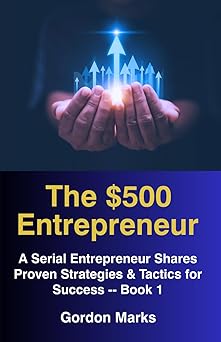
The $500 Entrepreneur — Full Review


Title: The $500 Entrepreneur: Advice from a Serial Entrepreneur Based on Actual Business Experience — Book 1
Author: Gordon Marks
Format: Paperback, around 208–210 pages
Publication date: August 29, 2025


Quick overview (what this book is trying to do)

The $500 Entrepreneur is a compact, practice-first guide aimed at people who want to start small, low-risk businesses with minimal capital. Gordon Marks positions the book as a collection of real-world lessons and tactical steps distilled from his experience as a serial entrepreneur. Instead of long theory or lofty case studies of unicorns, the emphasis is on actionable moves you can make with a few hundred dollars and a lot of elbow grease.

That promise — small capital, big practicality — is the book’s central selling point and the lens through which it is best evaluated.


Structure and style

The book is organized into short chapters and checklist-style sections. Each chapter focuses on a common entrepreneurial problem — validating an idea, simple cash flow management, low-cost marketing, outsourcing cheaply, and scaling the initial revenue stream. The prose is plainspoken and brisk; Marks writes like a practitioner giving direct advice rather than an academic writing for a classroom. That makes it easy to read in one sitting and useful as a quick reference manual when you’re in the middle of actually launching something.


What works — strengths

  1. Actionable, low-cost tactics. The book’s core strength is a long list of specific moves you can make with low capital: quick validation experiments, lean customer acquisition channels that don’t require big ad budgets, and simple operational shortcuts. For readers who’ve been stuck in planning paralysis, these tactics are invigorating.

  2. Realistic expectations. Marks is candid about limits: a $500 start rarely makes you rich overnight. Instead, the book frames the $500 as a way to buy learning and initial traction. That pragmatism helps avoid the hype-heavy tone of many entrepreneurship books.

  3. Useful micro-case studies. Rather than profiles of famous founders, the book contains small, focused examples of micro-businesses (freelance services, niche e-commerce experiments, local service gigs) that show how minor pivots and discipline produce steady results.

  4. Readable format. Short chapters and clear headings make it easy to find a tip when you need it. The conversational style reduces friction for new founders who may be intimidated by denser business books.


What doesn’t work — criticisms

  1. Limited depth for later stages. If you’re past the idea-validation phase and looking to scale aggressively or raise institutional capital, the book’s advice is too tactical and small-scale. It shines for day-one activities but is thin on growth architecture, systems thinking, and fundraising strategy.

  2. Occasional repetition. Because the book’s central theme is narrow, some chapters circle back to similar points (test cheaply, iterate quickly). For readers who prefer tightly compressed books, this can feel redundant.

  3. Surface treatment of important topics. Elements like legal structure, taxes, and risk mitigation receive only practical notes rather than deep dives. That’s acceptable for a primer, but readers should plan to follow up with specialized resources when needed.

  4. Author context could be clearer. Marks writes from experience, but the book sometimes assumes the reader will take anecdotes at face value. A few more transparent case details (revenue numbers, timelines) would strengthen credibility.


Standout chapters and ideas

  • The $500 validation loop: A short, repeatable cycle the book presents for turning ideas into paid pilots with minimal spend. It’s a practical framework for anyone who wants evidence before committing more resources.

  • Service-first productization: Marks encourages starting with a service (consulting, done-for-you tasks) that can later be turned into a product or course — a pragmatic path for monetization with low up-front investment.

  • High-ROI marketing moves: Rather than broad social media fantasies, the book prioritizes targeted outreach, partnerships, and inexpensive paid tests. These are rooted in measurable short-term conversion thinking.


Who this book is best for

It is less useful for later-stage founders, corporate intrapreneurs who need enterprise playbooks, or readers seeking comprehensive legal/tax/scale guidance.


Practical takeaways you can use today

  1. Spend your first $500 on learning, not branding: market tests, prototypes, and direct customer conversations.

  2. Prioritize revenue experiments that return cash quickly (one-time services, pilot offers) instead of long product development cycles.

  3. Use simple funnels: targeted outreach → small paid pilot → upsell to retainer or productized service.

  4. Outsource ruthlessly for time-consuming tasks and aim to keep customer acquisition repeatable and measurable.


Final verdict

The $500 Entrepreneur does precisely what it advertises: it gives practical, experience-based advice for launching micro-businesses on a shoestring. For its audience — people who want to turn an idea into paying customers without complex funding rounds — it is a clear, useful, and motivating read. The book’s limitations are inherent to its scope: if you want advanced scaling, extensive legal guidance, or venture-scale strategy, you’ll need complementary resources. But as a primer and tactical field guide for bootstrapping, it’s an effective and readable choice.

Rating: Strong recommendation for bootstrappers and side-projecters; a solid 4 out of 5 within that category.

Get The $500 Entrepreneur On Amazon!

Friday, June 20, 2025

Book Review: 127 Home-Based Job & Business Ideas: Best Places to Find Jobs to Work from Home & Top Home-Based Business Opportunities (Passive Income Freedom Series) by Gundi Gabrielle


In the modern economy where flexibility, independence, and digital connectivity have reshaped the concept of employment, 127 Home-Based Job & Business Ideas by Gundi Gabrielle emerges as an informative and practical guide for aspiring entrepreneurs and remote workers. As part of the Passive Income Freedom Series, this book aims to inspire readers to break away from the traditional 9-to-5 grind and explore the myriad of income opportunities available from the comfort of home.

Overview and Structure

The book is structured to be approachable, organized, and easy to digest. Gabrielle categorizes 127 ideas into manageable segments, making it simple for readers to browse based on their interests, skill levels, and financial goals. Rather than diving deep into a few concepts, the author opts for a broad survey approach, offering a wide panorama of options that range from beginner-friendly gigs to more complex business models. This layout is ideal for those in the exploration phase who are seeking direction or inspiration.

Each job or business idea comes with a brief explanation, highlighting the core requirements, the level of difficulty, the potential for income, and often a general roadmap on how to get started. From freelance writing and virtual assistance to dropshipping, affiliate marketing, and self-publishing, the book covers a wide range of fields. There are also lesser-known opportunities included, which adds value for readers who may already be familiar with the more common options.

Accessibility and Tone

One of the strongest aspects of Gabrielle’s writing is her encouraging and conversational tone. She writes as though speaking directly to the reader, providing reassurance and motivation throughout. This makes the book not just informative but also emotionally supportive for individuals who may be feeling overwhelmed or uncertain about starting something new. The language is jargon-free and friendly, which is particularly helpful for beginners unfamiliar with online business terminology.

Gabrielle’s background in self-publishing and passive income strategies adds credibility to her suggestions, and her passion for location-independent living permeates the book’s message. The tone is one of empowerment, urging readers to take action and explore options they may not have previously considered possible.

Practical Usefulness

The practical utility of the book is clear in the way it encourages readers to take inventory of their skills, passions, and available time. Gabrielle often notes which ideas are better suited for part-time work, full-time careers, or scalable businesses. This makes the book useful not only for people seeking a little extra side income but also for those wanting to transition entirely to self-employment.

While the book doesn't provide exhaustive step-by-step instructions for each idea, it serves as an excellent launchpad for further research and action. It’s ideal for brainstorming, planning, and discovering niches that may have previously gone unnoticed. Those looking for more in-depth how-to guides may need to follow up with more specialized books or online resources, but the initial spark of possibility begins here.

Range of Opportunities

The sheer number of ideas included in the book is one of its biggest draws. It encompasses opportunities that involve writing, design, digital marketing, customer service, coaching, online education, sales, arts and crafts, and even pet services. Gabrielle includes passive income models as well as active income roles, giving readers options depending on their preferred lifestyle and goals.

What stands out is the book’s attention to scalability. Many of the business ideas are framed with an eye toward growth—what might begin as a side hustle could eventually become a full-fledged business with recurring income. The emphasis on passive income streams reinforces the broader theme of freedom and self-determination.

Limitations

While the breadth of ideas is impressive, the book is more of a comprehensive list than a deep-dive guide. Some readers might find that certain sections feel too general or lack the in-depth details needed to start right away. The book is not a technical manual but rather a curated buffet of options that need to be explored further. Readers expecting turnkey business instructions may be disappointed.

Additionally, while the book is well-organized, some ideas may overlap in concept or execution. A few categories could benefit from more distinct separation or updated insights reflecting current trends in the online job market.

Final Thoughts

127 Home-Based Job & Business Ideas by Gundi Gabrielle is an inspiring and versatile resource for anyone seeking to explore home-based income opportunities. Whether you're a stay-at-home parent, a recent graduate, a retiree, or simply someone looking for more control over your career, this book offers a wide array of ideas that can fit a variety of circumstances and aspirations.

It does not promise instant riches or quick fixes, but it does open doors to realistic and achievable alternatives to traditional employment. As a starting point for discovering potential paths, it is a valuable tool, especially for readers who are motivated but uncertain about where to begin.

Ultimately, Gabrielle delivers a motivating, wide-ranging catalog of opportunities that blend creativity, freedom, and the possibility of financial independence—perfect for today’s shifting workforce landscape.

See 127 Home Based Job & Business Ideas On Amazon!

Thursday, June 5, 2025

Full In-Depth Review: 100+ Proven Ways to Make Money From Home: The Ultimate Guide to Work From Home Jobs, Side Hustles, and Passive Income Opportunities by Ravindra K and Money Maker Publications


In today's rapidly evolving economic landscape, more people than ever are exploring ways to earn a living outside the traditional 9-to-5 workplace. 100+ Proven Ways to Make Money From Home by Ravindra K and Money Maker Publications is a comprehensive guide tailored to this growing audience. This large print edition, released in December 2024, promises to be a practical roadmap to financial independence, offering readers an extensive list of money-making strategies that range from conventional to cutting-edge.

Structure and Format

The book is neatly organized and user-friendly, thanks to its large print format. This design choice makes it particularly accessible for readers who prefer a more readable layout, including older adults and individuals with visual challenges. Each chapter is segmented into clearly defined categories, making it easy to browse and locate topics of interest. Whether you're interested in freelancing, launching a small business, leveraging passive income, or diving into the digital gig economy, the layout ensures you won’t get lost in information overload.

Content Overview

As the title suggests, the core of the book revolves around listing and explaining over 100 different ways to make money from home. These are grouped into practical categories, including:

  • Freelance and Remote Jobs: The guide highlights in-demand skills such as writing, graphic design, and virtual assistance, while also touching on more technical fields like coding and digital marketing. Each listing gives a brief yet informative overview of the job, what’s required to get started, and the potential earnings.

  • Side Hustles: This section is one of the more varied and creative parts of the book. It ranges from popular gig economy roles like ridesharing and food delivery to more niche opportunities such as voiceover work or online tutoring. The author includes ideas that suit different lifestyles, energy levels, and personality types, which adds to the book’s versatility.

  • Passive Income Opportunities: The passive income section offers strategies that may require initial time or financial investment but promise ongoing rewards. Examples include renting out property, earning royalties from digital products, and creating online courses. The book also ventures into lesser-known avenues such as affiliate marketing, print-on-demand businesses, and dividend investing.

  • Home-Based Business Models: For entrepreneurial readers, the guide features ideas for launching full-fledged businesses from home, such as eCommerce stores, subscription box services, and consulting firms. These suggestions are supported with tips for branding, customer acquisition, and long-term scalability.

Practicality and Tone

One of the strongest aspects of the book is its practical tone. Rather than offering vague promises of “getting rich quick,” the authors maintain a realistic perspective. They outline what each opportunity entails, discuss potential startup costs, and acknowledge the commitment needed to turn side hustles into sustainable income streams.

The language used is approachable and motivational without being overly salesy or filled with jargon. Ravindra K brings a tone of mentorship to the writing, making readers feel like they’re being guided by someone who genuinely wants them to succeed.

Audience and Usefulness

This book is especially useful for individuals at different points in their financial journey. Beginners looking for their first work-from-home job will find step-by-step instructions on how to enter certain fields. Intermediate users seeking to diversify income or explore side projects will find a treasure trove of new ideas. Even seasoned entrepreneurs might discover fresh perspectives on monetizing their skills or time more efficiently.

It is also an excellent resource for stay-at-home parents, retirees, students, or anyone needing supplemental income with flexible hours. The range of options ensures that readers can find a strategy that aligns with their strengths, schedules, and income goals.

Unique Selling Points

  • Diversity of Ideas: Unlike many similar guides that focus heavily on digital-only paths, this book includes a healthy mix of online and offline opportunities.

  • Realism and Encouragement: It balances inspiration with actionable insights, steering clear of hype and focusing on achievable success.

  • Accessibility: The large print edition increases readability, enhancing the overall experience.

Areas for Improvement

While the book is rich in content, some readers may wish for deeper case studies or personal anecdotes to bring certain concepts to life. In a few sections, the information remains surface-level and could benefit from additional detail or examples to make the strategies more tangible.

Additionally, the sheer volume of ideas might feel overwhelming at first glance. A recommendation system or a way to prioritize which methods best suit which types of readers would make the book even more effective as a guide.

Final Thoughts

100+ Proven Ways to Make Money From Home is an ambitious, well-rounded, and timely resource for anyone looking to earn money from the comfort of their home. Whether you’re seeking full-time remote work, a part-time gig, or long-term passive income, this book provides a comprehensive starting point. With its no-nonsense approach, accessible layout, and broad spectrum of strategies, Ravindra K and Money Maker Publications have created a valuable tool that empowers readers to take control of their financial future—one proven idea at a time.

See 100+ Proven Ways To Make Money From Home On Amazon!

Tuesday, April 29, 2025

Staying Positive While Job Hunting: Turning Challenges into Motivation


Looking for a job can be one of the most emotionally draining experiences in life. Whether you're fresh out of college, laid off unexpectedly, or seeking a career change, the process often comes with uncertainty, rejection, and self-doubt. It's easy to slip into negativity, especially when weeks go by with no callbacks or when promising interviews don't result in offers. However, maintaining a positive mindset is not only essential for your mental health but also significantly improves your chances of landing the right position. The key lies in treating job hunting like an actual job—structured, purposeful, and proactive.

The Emotional Toll of Job Searching

There’s no denying the downside of the job search journey. It often starts with high hopes, polished resumes, eager networking, and ambitious goals. But after a few unanswered applications or robotic rejection emails, confidence can start to wane.

Rejection feels personal, even though it usually isn’t. The silence from companies can be disheartening, and comparing yourself to peers who seem to land jobs effortlessly can amplify feelings of inadequacy. You might question your skills, experience, or even your self-worth.

The lack of routine can also contribute to anxiety. Unlike traditional employment, job hunting lacks structure, supervision, or feedback. Days can blur together, and without clear milestones or results, motivation often dips.

Finding the Silver Linings

Despite these challenges, job hunting also offers unique opportunities. It’s a time for self-discovery and growth. You have the chance to reassess your goals, learn new skills, and connect with professionals you might never have met otherwise.

Every application and interview, even the ones that don't lead to offers, builds resilience and experience. You become more articulate about your strengths, more prepared for questions, and more aware of what you want—and don’t want—in a future role.

Moreover, job searching can help develop valuable skills such as time management, self-discipline, communication, and adaptability. These qualities are not only helpful in the hunt itself but are also attractive to potential employers.

Treating Job Hunting Like a Job

One of the best ways to stay positive and productive during this period is to treat the search itself as a full-time job. That means setting a schedule, creating goals, and tracking your progress regularly.

1. Set a Daily Routine
Start your day at the same time each morning. Dedicate specific hours to researching companies, tailoring resumes, writing cover letters, and applying. Incorporate time for learning new skills or certifications that align with your career goals. End the day with a reflection on what you’ve accomplished.

2. Create Measurable Goals
Instead of vaguely aiming to “apply for jobs,” set specific targets: apply to five roles a day, reach out to three professionals on LinkedIn each week, attend one virtual networking event bi-weekly. Tangible goals keep you focused and give you small wins to celebrate.

3. Track Your Progress
Use a spreadsheet or journal to monitor applications, interview dates, follow-ups, and feedback. This helps you stay organized and provides a visual record of your efforts. Seeing everything laid out can also highlight patterns or areas needing improvement.

4. Continue Developing Yourself
Dedicate some of your job-search hours to learning. Take an online course, read industry-relevant articles, or work on personal projects. These activities not only enhance your resume but also boost your confidence and sense of purpose.

5. Build a Support Network
Talk to friends, family, mentors, or other job seekers. Sharing experiences and advice can make the journey feel less lonely. Even casual conversations can lead to valuable opportunities or uplifting encouragement.

Managing Negativity and Maintaining Momentum

It's natural to feel discouraged at times. When this happens, give yourself permission to take a break. Go for a walk, spend time on a hobby, or simply rest. Mental well-being is crucial, and pushing through burnout helps no one.

Avoid dwelling on what didn’t work. Instead, try to extract lessons from each setback. Ask for feedback when possible, and use it constructively. Rejection is often redirection—guiding you toward a role that's a better fit.

Keep in mind that the job market is not always a reflection of your abilities. External factors—economic conditions, seasonal hiring trends, company reorganizations—can all influence timing. Be kind to yourself during the process.

A Time of Transformation

Looking for a job is rarely anyone’s favorite phase of life. It tests patience, resilience, and self-esteem. But with the right mindset and structure, it can also become a time of transformation.

Approach each day with purpose. Treat your search like the job it is—complete with responsibilities, growth, and reward. Celebrate small victories and remember that each effort brings you closer to your next opportunity.

The journey may be tough, but your persistence, positivity, and dedication will pay off—not just in landing a job, but in building a stronger, more confident version of yourself. Are you setting a daily structure for your job search yet?

See Books On Job & Career Development On Amazon!

Monday, April 28, 2025

How Taking Courses Can Help You Start Your Own Business


Starting a business is an exciting venture, but it also comes with challenges that can overwhelm even the most determined entrepreneur. Many new business owners face steep learning curves, often finding themselves responsible for everything from product development and marketing to finance management and legal compliance. One powerful tool that can ease this journey is education—specifically, taking targeted courses. Whether online, in-person, or hybrid, courses can provide critical skills, boost confidence, and lay a strong foundation for building a successful business.

Gaining Practical Knowledge and Skills

One of the primary benefits of taking courses is acquiring practical knowledge that directly applies to business operations. Entrepreneurs often need a diverse skill set that spans multiple disciplines, including accounting, marketing, leadership, negotiation, customer service, and strategic planning. Courses designed around these topics offer structured learning, making complex subjects more understandable.

For example, an accounting course can teach you how to manage your cash flow, read financial statements, and prepare for tax obligations. A marketing course can provide insights into building a brand, identifying target markets, and designing effective advertising campaigns. Instead of struggling through trial and error, courses equip you with proven techniques and strategies that professionals have used successfully.

Boosting Confidence

Starting a business can feel overwhelming because of the many unknowns involved. It is natural to question your decisions or feel unsure about your next steps. Courses not only deliver information but also provide frameworks for thinking through problems systematically. They can validate your instincts and give you reassurance that you are making informed choices.

The confidence gained from education often translates into better leadership. When you understand the fundamentals of running a business, you are more likely to inspire trust among potential investors, employees, and customers. Being well-informed enables you to articulate your vision clearly and answer tough questions with assurance.

Learning from Experts

Courses are often taught by industry professionals or seasoned entrepreneurs who have firsthand experience in building businesses. Their expertise can help you avoid common pitfalls and shortcut your learning process. Listening to their real-world examples, case studies, and success stories provides context that is difficult to obtain through self-study alone.

Moreover, these instructors typically update their courses to reflect current trends, technologies, and market realities. In a rapidly changing business environment, staying informed about new tools, evolving customer preferences, and emerging competitors is vital. Learning from experts ensures that your knowledge is both comprehensive and current.

Building a Professional Network

Courses, especially those conducted in-person or via live online platforms, offer valuable networking opportunities. The relationships you form with instructors, guest speakers, and fellow students can become important assets as you launch your business. These contacts may lead to mentorship, partnerships, referrals, or even future customers.

Networking within a course setting is particularly beneficial because it often brings together like-minded individuals who are also ambitious and motivated. Being surrounded by people who share your entrepreneurial mindset can inspire you, provide emotional support, and open doors to opportunities you might not encounter otherwise.

Enhancing Critical Thinking and Problem-Solving Skills

Running a business requires constant problem-solving. Courses help sharpen your ability to assess situations critically, weigh alternatives, and make strategic decisions. Whether through case study discussions, project-based assignments, or business simulations, courses expose you to scenarios that mirror real-world challenges.

This type of preparation trains you to think analytically and creatively under pressure. When your business faces unexpected obstacles—which it inevitably will—you will be better equipped to navigate them with resilience and adaptability.

Saving Time and Reducing Costs

Although it may seem counterintuitive, investing in education early on can save you considerable time and money down the line. Mistakes in business can be costly, whether due to mismanaged funds, poorly negotiated contracts, ineffective marketing, or flawed products. Courses offer the benefit of learning from the experiences and missteps of others, which can help you avoid making those same errors yourself.

Additionally, acquiring skills such as basic website design, social media marketing, or bookkeeping can reduce your initial reliance on expensive outsourced services. Over time, this can lower your startup costs and allow you to allocate your resources more efficiently.

Clarifying Your Business Vision

Sometimes, people are excited about the idea of entrepreneurship without having a clear plan or understanding of what it entails. Courses can help refine your business concept and test its feasibility before you invest significant time or money. Entrepreneurship courses often include modules on business model development, market research, and competitive analysis, guiding you to think critically about your ideas.

Through assignments, feedback sessions, and project work, you may discover ways to strengthen your original concept, identify additional revenue streams, or pivot to a more viable opportunity. The clarity you gain from structured learning can be the difference between a business that flounders and one that flourishes.

Establishing Good Habits Early

Success in business often depends as much on habits and mindset as it does on ideas. Courses encourage discipline, goal setting, time management, and continuous learning—all traits essential to entrepreneurial success. The very act of committing to a course, completing assignments, and applying new knowledge mirrors the discipline required to launch and grow a company.

Furthermore, exposing yourself to new ways of thinking broadens your perspective and instills a lifelong learning mentality. Entrepreneurs who embrace continuous education tend to be more adaptable, innovative, and successful over time.

Conclusion

Starting a business is a bold and rewarding endeavor, but it is not without its difficulties. Taking courses relevant to entrepreneurship equips you with the skills, knowledge, and confidence necessary to meet these challenges head-on. Beyond the tangible lessons, courses also offer access to expert guidance, professional networks, and new ways of thinking that can make all the difference between a struggling startup and a thriving enterprise. If you are serious about building a successful business, investing time and effort into your education is one of the smartest steps you can take.

See Entrepreneur Courses On Ebay! 

Work from Home Strategies: Developing an Independent Lifestyle (Towards Self-Reliance) by Stuart Tyson – An In-Depth Review


In today's rapidly evolving world, the concept of work is no longer tied to traditional offices and rigid corporate hierarchies. Stuart Tyson’s Work from Home Strategies: Developing an Independent Lifestyle (Towards Self-Reliance), published on September 26, 2024, arrives at a perfect time when millions are reimagining what personal success and independence look like. This book offers a thorough and practical guide for those ready to transition into a lifestyle of self-reliance, with a strong focus on strategic thinking, self-discipline, and long-term planning.

A Clear Vision of Independence

From the very first chapter, Tyson makes it clear that working from home is not simply about finding a remote job or freelancing. It is about cultivating an entirely new way of living, where one’s skills, habits, and mindset align toward sustained independence. Tyson’s definition of "self-reliance" goes beyond financial freedom; he links it to emotional resilience, time management, and personal accountability.

Unlike many "work from home" books that focus narrowly on side hustles or gig economy tactics, Tyson broadens the conversation. He urges readers to see working from home as a philosophical shift, a commitment to building a durable, self-sustaining lifestyle rather than chasing temporary trends.

Practical Strategies Rooted in Realism

One of the standout strengths of Tyson’s work is its grounded realism. He does not romanticize working from home. He acknowledges the difficulties — the isolation, the temptations of procrastination, the blurring of work-life boundaries — and provides detailed methods to address them.

Tyson offers strategies for setting up a productive home environment, designing a structured daily schedule, and establishing professional habits that survive without external supervision. He dedicates significant sections to time-blocking, goal-setting, and the importance of developing multiple income streams, all explained with clarity and a tone that feels both encouraging and pragmatic.

Importantly, Tyson does not rely on vague motivational language. Each chapter provides actionable exercises designed to help readers immediately apply the concepts discussed. His emphasis on small, consistent actions over flashy overnight successes makes the book particularly valuable for readers serious about long-term change.

Mindset as the Cornerstone

A recurring theme throughout Work from Home Strategies is the importance of mindset. Tyson argues persuasively that technical skills and business acumen are secondary to cultivating a resilient and self-directed attitude. He discusses concepts like intrinsic motivation, adaptability, and antifragility, presenting them in a way that is accessible to readers at any stage of their journey.

One of the book’s most memorable sections examines the dangers of "learned helplessness" — the passive belief that one's circumstances are unchangeable. Tyson carefully deconstructs this mindset and replaces it with a blueprint for gradual, empowered decision-making.

He also weaves in insights about emotional self-regulation, emphasizing that successful independent workers need the ability to manage stress, uncertainty, and self-doubt without constant outside validation.

Building Income Streams with Integrity

While Tyson touches on familiar work-from-home options such as consulting, digital products, freelance writing, and e-commerce, he does so with a refreshing emphasis on alignment between personal values and professional choices. Rather than chasing the latest fads or high-risk opportunities, he encourages readers to build businesses or careers rooted in their authentic strengths and passions.

This approach positions Work from Home Strategies apart from many books that prioritize quick gains over sustainable, ethical growth. Tyson discusses how to assess personal skills, find niche markets, develop offerings, and market oneself effectively — all without resorting to manipulative tactics.

He also dedicates an important section to financial self-management, discussing the importance of budgeting, saving, and investing prudently to support a truly independent lifestyle.

A Framework for Lifelong Growth

Rather than presenting working from home as a destination, Tyson frames it as the beginning of a continuous journey. He stresses the need for lifelong learning, frequent self-assessment, and the willingness to reinvent oneself as industries and personal circumstances change.

His concluding chapters are particularly inspiring, laying out a vision where readers do not just work from home for convenience or necessity but because they are actively creating a life filled with autonomy, purpose, and self-fulfillment.

The book ends on an empowering note, urging readers to think of themselves not just as employees or entrepreneurs, but as architects of their own futures. Tyson’s message is ultimately one of hope, discipline, and personal power.

Final Thoughts

Work from Home Strategies: Developing an Independent Lifestyle (Towards Self-Reliance) by Stuart Tyson is a standout in the crowded field of work-from-home literature. It offers more than strategies; it offers a philosophy for building a deeply satisfying life rooted in independence and self-reliance.

With its blend of practical advice, psychological insight, and long-term vision, this book is ideal for anyone who is serious about transforming their work life and reclaiming their personal freedom. Whether you are just starting to explore work-from-home options or are looking to deepen your self-sufficiency, Tyson provides a guide that is as rigorous as it is inspiring.

This is not just a book to read once and shelve; it is a resource to revisit repeatedly as you progress along your independent path.

If you are committed to developing a resilient, fulfilling lifestyle on your own terms, Stuart Tyson's latest offering is an essential read.

See Work From Home Strategies On Amazon!

Review of 35 BEST WORK FROM HOME JOBS: Best Remote Jobs, Earn Money Both Online and Offline, Passive Income, Financial Freedom and Finding the Right Home Jobs by Bharline Binny

35 BEST WORK FROM HOME JOBS is a concise and beginner-friendly guide designed for anyone interested in earning income from home. Written ...